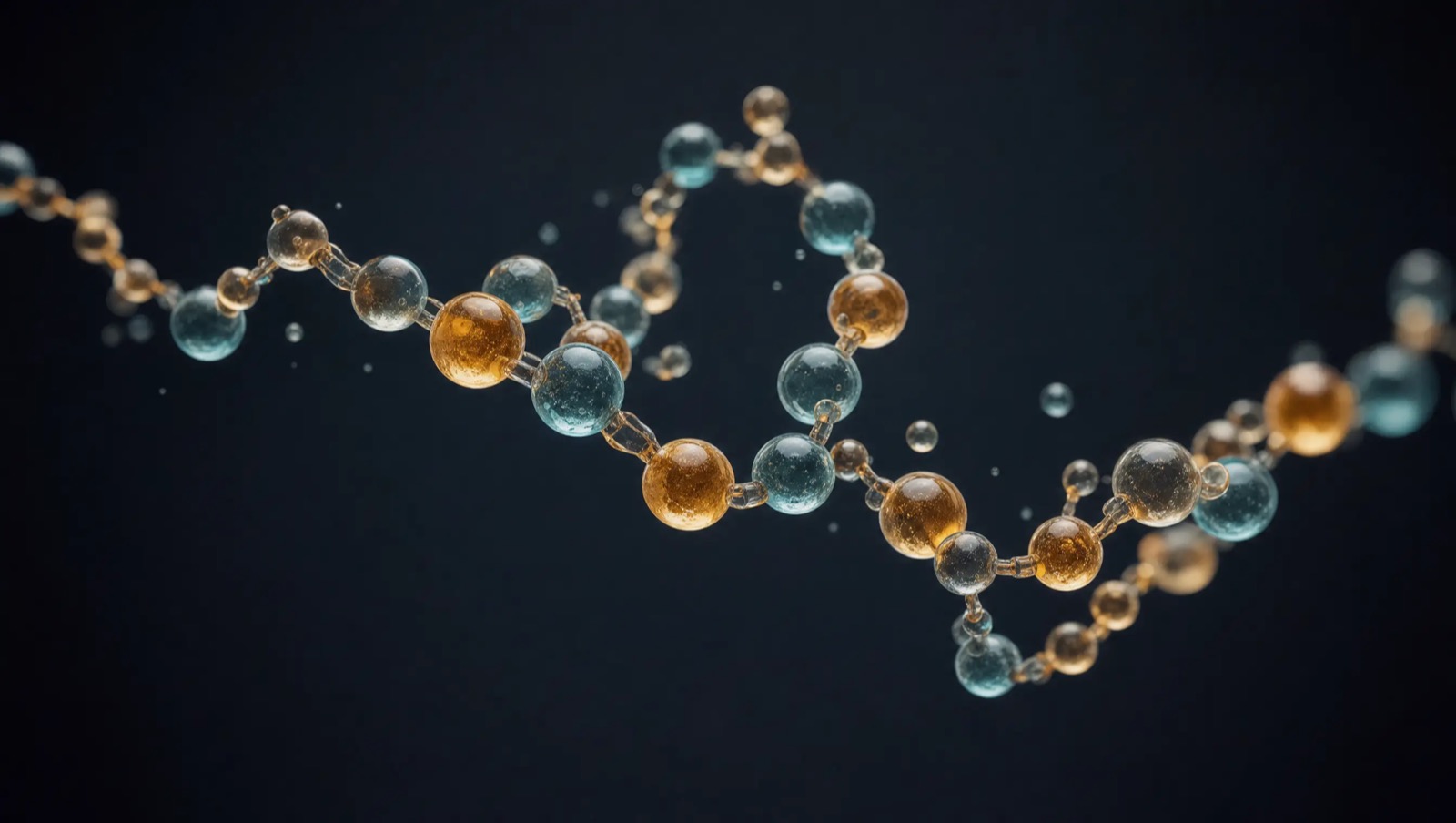
Peptide field guide
What are peptides?
Short chains of amino acids — the same building blocks as proteins, only much shorter. Here's the plain-English version, plus a growing glossary of the compounds people ask about most.
Peptides are short chains of amino acids. Amino acids are the building blocks of all proteins; when a handful of them link together in a chain, that chain is a peptide. A protein can be hundreds of amino acids long — a peptide is typically a few to a few dozen. That's the whole idea. Everything else is detail.
Peptides vs. proteins — it's mostly length
Both peptides and proteins are amino acids strung together by the same kind of chemical link (a "peptide bond"). The difference is size. Short chains are called peptides; long chains that fold into a working 3-D structure are called proteins. There's no exact cutoff, but "peptide" usually means somewhere between 2 and about 50 amino acids. Insulin, for example, sits right around the blurry border.
Why research peptides arrive as a powder
Most research peptides are supplied as a small vial of white, freeze-dried powder (the technical word is lyophilised). Removing the water keeps the peptide stable in storage. The catch: a dry powder has no volume, so it can't be drawn into a syringe or measured as a dose. Before anything else, it has to be reconstituted — dissolved in a measured volume of liquid so the solution has a known strength in milligrams per millilitre.
Product-specific preparation instructions must come from the manufacturer, pharmacist, or prescribing clinician. Amidra does not calculate preparation or dosing.
A glossary of common peptides
Plain-English explainers about what each compound is. Definitional only: no preparation, benefit, dosing, or efficacy claims.
Common questions
What are peptides?
Peptides are short chains of amino acids — the same building blocks that make up proteins, only much shorter. A protein can be hundreds of amino acids long; a peptide is typically a few to a few dozen.
What is the difference between a peptide and a protein?
Length. Both are chains of amino acids linked by peptide bonds. Short chains are called peptides; long chains that fold into a structure are called proteins. There is no hard cutoff, but "peptide" generally means roughly 2–50 amino acids.
Why do research peptides come as a powder?
They are freeze-dried (lyophilised) so they stay stable in storage. Before use they are reconstituted — dissolved in a measured volume of liquid — so the solution has a known concentration in mg/mL that can be measured in a syringe.
Are all peptides the same thing as drugs like Ozempic?
No. Some peptides are approved prescription medicines — GLP-1 drugs such as semaglutide and tirzepatide are peptides. Others are sold and studied only as research chemicals and are not approved to treat anything. The category "peptide" describes the chemistry, not the legal status.
Does Amidra tell me which peptide or dose to use?
No. Amidra is a tracking and education tool. It never recommends a compound, dose, schedule, or preparation method. It records values from instructions you already have.