What is TB-500? A plain-English explainer
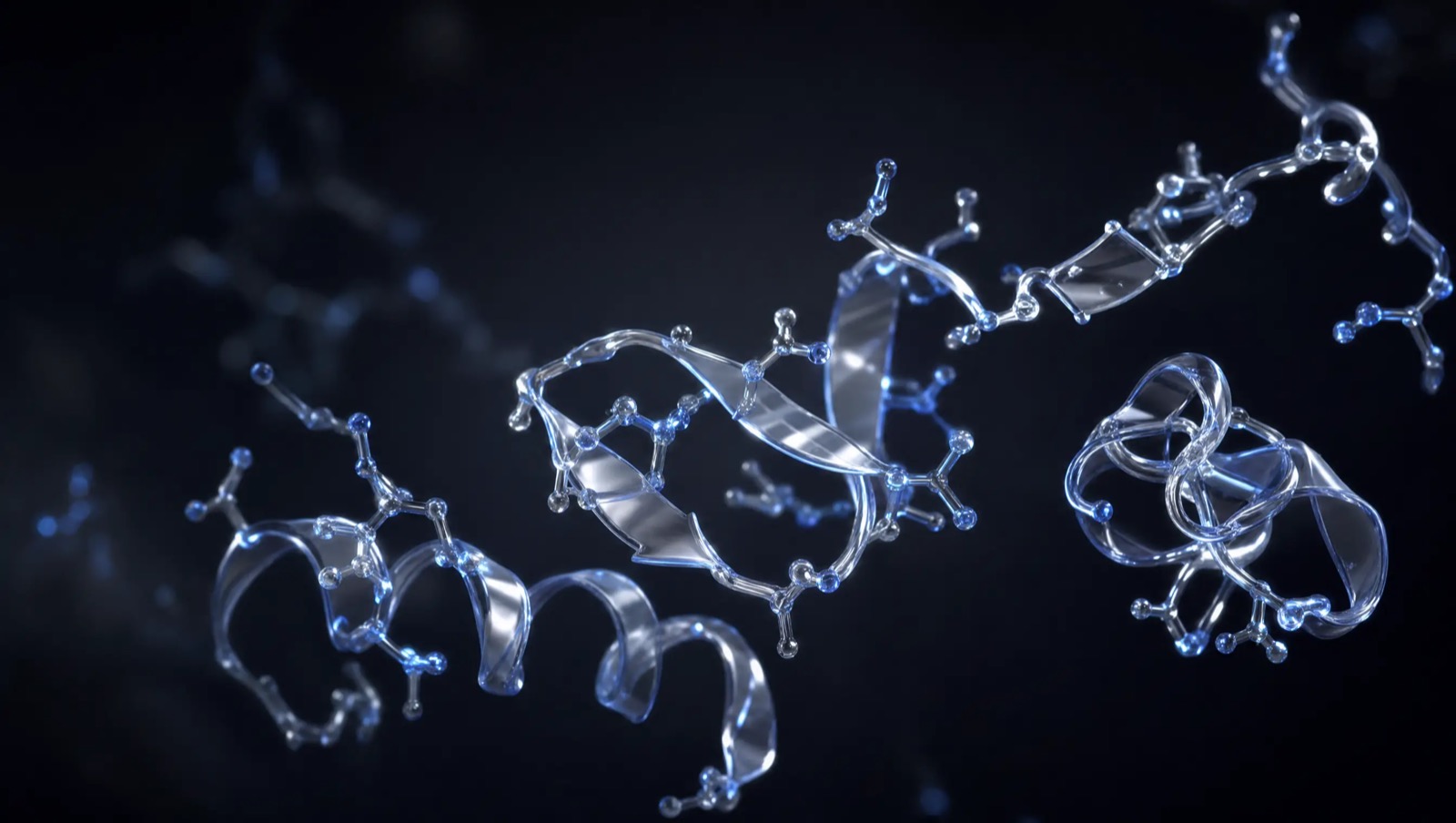
A lab-made seven-amino-acid fragment modeled on a section of the naturally occurring protein thymosin beta-4.
TB-500 is a synthetic peptide — a seven-amino-acid fragment modeled on a small section of thymosin beta-4 (Tβ4), a naturally occurring 43-amino-acid protein. Its research sequence, Ac-LKKTETQ, corresponds to amino acids 17 through 23 of that larger protein. It is sold and studied as a research chemical, not an approved medicine.
That one paragraph is the whole definition. The rest of this page unpacks it at two levels — plain English, then a little deeper — and shows how the reconstitution math works, because TB-500 ships as a dried powder that has to be mixed and measured before anything else.
TB-500 in plain English
A peptide is a short chain of amino acids; a fragment is a piece cut from a longer one. TB-500 is both — a synthetic peptide that reproduces just seven amino acids from one region of thymosin beta-4, a protein that is 43 amino acids long.
Researchers identified that this short stretch — positions 17 to 23 of the parent protein — could be synthesized on its own in the lab, and gave it the code TB-500. So when you see the name, read it as: a lab-made fragment of a naturally occurring protein, not the whole protein and not a wholly new invention.
It usually arrives as a small glass vial of white powder. The powder is the peptide with the water removed (freeze-dried, or “lyophilised”) so it stays stable in storage. On its own the powder can’t be measured into a syringe — there’s no volume to draw. That’s why the next step, reconstitution, exists.
The science, a little deeper
A few specifics that the plain-English version glosses over:
- It’s a defined fragment, not the whole protein. Thymosin beta-4 is 43 amino acids long; TB-500 reproduces only seven of them (Ac-LKKTETQ, positions 17–23). That distinction matters because much of the published research on this region examines the parent protein, in cell and animal models, rather than the isolated fragment in people.
- It’s supplied lyophilised. Removing the water gives the powder a long shelf life; adding a measured liquid back (reconstitution) is what turns it into a solution with a known strength.
- Its regulatory status is specific, not vague. TB-500 has not been approved as a drug by the FDA or EMA. As of 2026 it is also listed by the FDA as a bulk drug substance that cannot be used in compounded prescriptions — a separate, additional restriction on top of not being an approved medicine.
If you want the classification in one line: TB-500 is a synthetic research peptide, 7 amino acids, corresponding to a fragment of thymosin beta-4, supplied as a freeze-dried powder for reconstitution.
How reconstitution works for TB-500
Reconstitution is just dissolving the powder in a known volume of liquid so you have a concentration — milligrams of peptide per millilitre of solution. Once the concentration is fixed, the volume you draw for any target dose is simple arithmetic:
- Concentration = vial amount (mg) ÷ diluent volume (mL)
- Draw volume = target dose ÷ concentration
- Syringe units = draw volume (mL) × the units-per-mL of your syringe
The numbers all come from your own vial label and your own records — the peptide amount printed on the vial and the volume of bacteriostatic water you add. The separate Amidra web calculator runs exactly those three steps and shows the formula at each one, so you can check it by hand. It never fills in a dose for you.
What Amidra does — and doesn’t — do here
Amidra is a tracking and education tool. It converts the values you enter and helps you keep a protocol organised; it does not recommend a dose, a compound, or a schedule, and it takes no position on whether anyone should use TB-500. Those decisions belong with a qualified healthcare professional. The information above is definitional — what the compound is — not medical advice.